From Mac
The Five Survivors
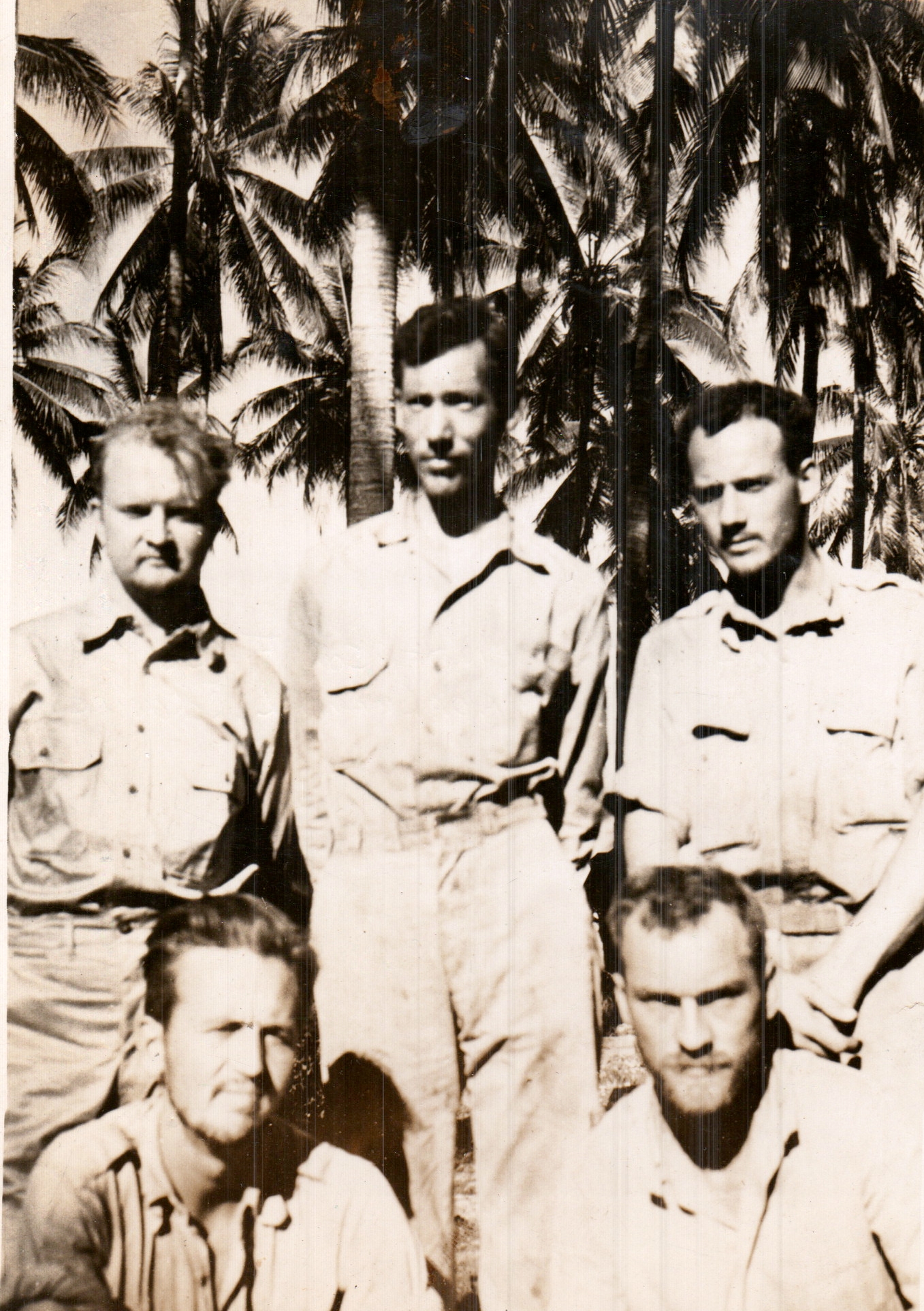
Mac---my father--the pilot, bottom left, Harvey --- copilot, Wes---navigator, Don--- bombardier, and Bill ---engineer
When the Japanese bombed Pearl Harbor on December 7, 1941, the U.S. was not prepared for war. Instead of striking back at Japan, Roosevelt had a Europe-first policy, and all available military personnel, equipment, and aircraft were sent to fight Hitler. Because the U.S. didn't have a bomber that could fly the long distances needed over the Pacific, the B-24 Liberator was designed and manufactured. While the B-24, was being built, they recruited and trained men on other aircraft. These young men were sent to pilot, navigator, and bombardier schools all over the country. In April 1942, the first six Liberators rolled off the assembly line and were delivered to the waiting crews. These men now trained on the new planes until October, when they were ordered to Hawaii to await the recapture of Guadalcanal.
These new planes were designed and assembled so quickly that there was no time for beta testing, and they were extremely dangerous to fly. They were initially nicknamed "the Widowmaker." My father, 1st Lt. HG McNeese, was a new pilot. His entire crew was newly trained, mostly teenagers. They arrived at the new base, Henderson Field, on Guadalcanal on February 11th — four days after the Marines secured the island.
Two days later, these five brave young men, along with four others, left Guadalcanal on their first mission on February 13, 1943. The strike force included six B-24 Liberators and 12 Navy escort fighters. They flew in broad daylight "up the slot" to Shortland Harbor. Their targets were Japanese shipping vessels. Lt. H.G. "Mac " McNeese piloted "Bombs Away" — the 3rd plane in the formation. As the squadron approached the harbor, 50 Japanese Zeros, already airborne and waiting for them, attacked. The attackers struck the lead plane, causing it to burst into flames. Gunfire hit a second plane, and it went spiraling down into the ocean. Mac's plane sustained heavy damage and was severely disabled after he dropped his bombs. Unable to keep up with the three remaining Liberators returning to base, he dropped out of formation and headed out to sea. The enemy shot out the communication system, and the men in the back of the plane, fearing a crash, parachuted out. As they floated down into the sea below, the Japanese strafed and killed them. Mac ditched the plane near an island, and the five survivors rowed for twenty hours to reach it. Read the full account in "Mac—The Wind Beneath My Wings."