From Mac
The B-24 Liberator
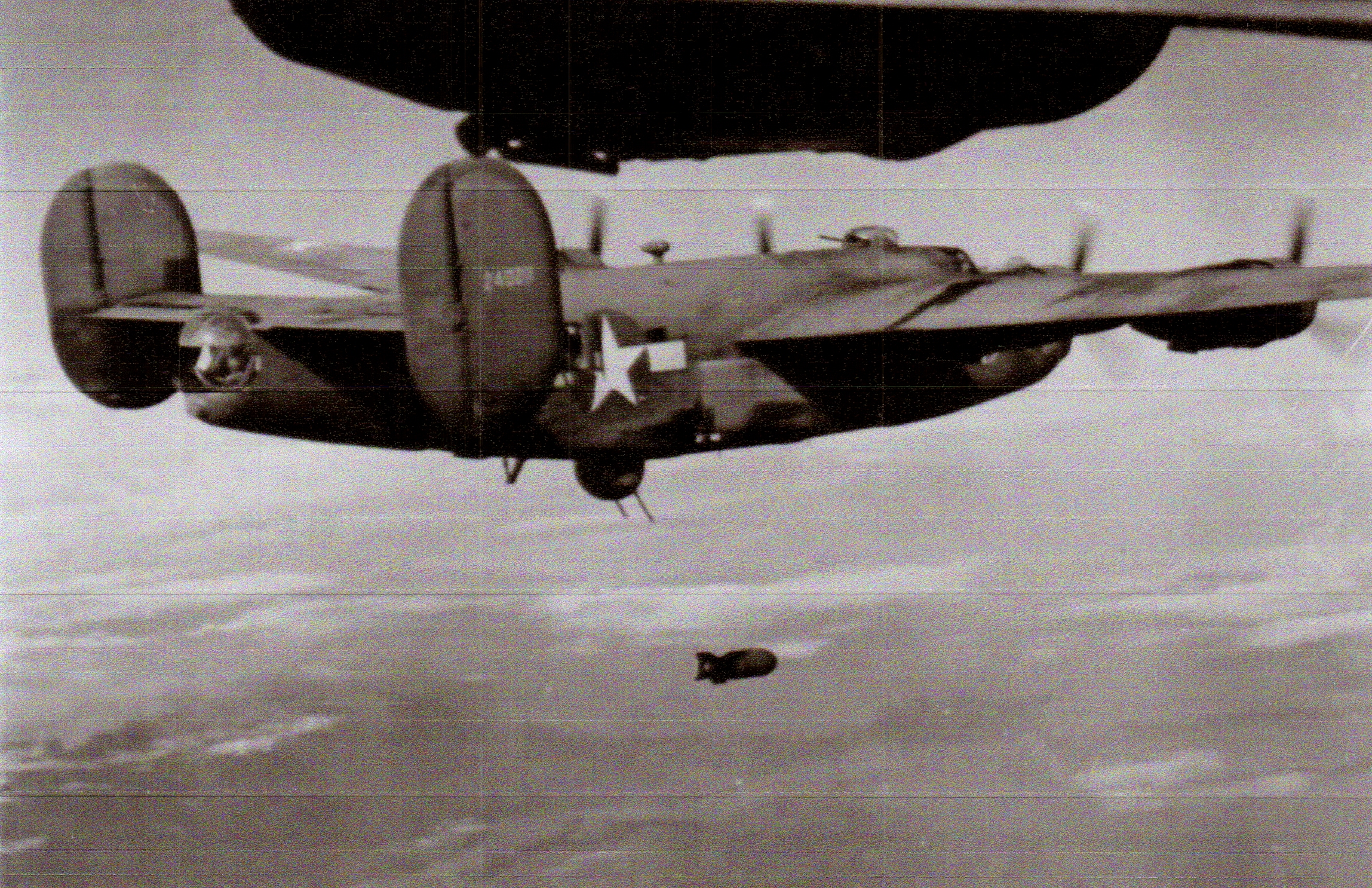
When the Japanese bombed Pearl Harbor on December 7, 1941, the U.S. was not prepared for war----with planes, equipment, or military personnel. And what they did have was sent to Europe to fight Hitler. Instead of immediately striking back at Japan, Roosevelt, in concert with Churchill, pursued a Europe-first policy.
The decision was partly because the U.S. didn't have a bomber that could fly the long distances needed to cross the Pacific Ocean. Engineers needed to design and manufacture a new plane---the B-24 Liberator. While the B-24 was being built, they recruited and trained men on other aircraft — primarily the B-17. The experienced flight crews were fighting in Europe, so the military sent young, raw recruits to pilot, navigator, and bombardier schools across the country. In April 1942, the first six Liberators rolled off the assembly line and were delivered to the waiting crews of the 307th, a newly activated bomb group. These men had only six months to train on the new planes until they were ordered to Hawaii to await the recapture of Guadalcanal.
Engineers designed and assembled these new planes so quickly that they had no time for beta testing, making them extremely dangerous to fly. They were initially nicknamed "the Widowmaker." These four-engine heavy bombers could carry and drop the heaviest bomb loads, and they had the longest range of their era from takeoff to landing. However, in 1943 alone, 850 Army Air Force crewmen were killed in 298 B-24 accidents. The lightweight construction, designed to increase range, and the location of fuel tanks in the upper fuselage made them extremely vulnerable to battle damage. They were also notorious for catching fire after being hit and during fuel transfers. Ditching or belly landing was dangerous since the fuselage tended to break apart because of the Davis Wing's position when it hit any surface without the cushioning of rubber wheels.
There were also no creature comforts. The cabins weren't pressurized or heated. At altitudes over 10,000 feet, temperatures could drop to 50 degrees below zero. There was only one actual exit, which was near the tail of the plane, making it difficult, if not impossible, for the crew to escape a disabled plane.
Read the full story in Mac---The Wind Beneath My Wings